
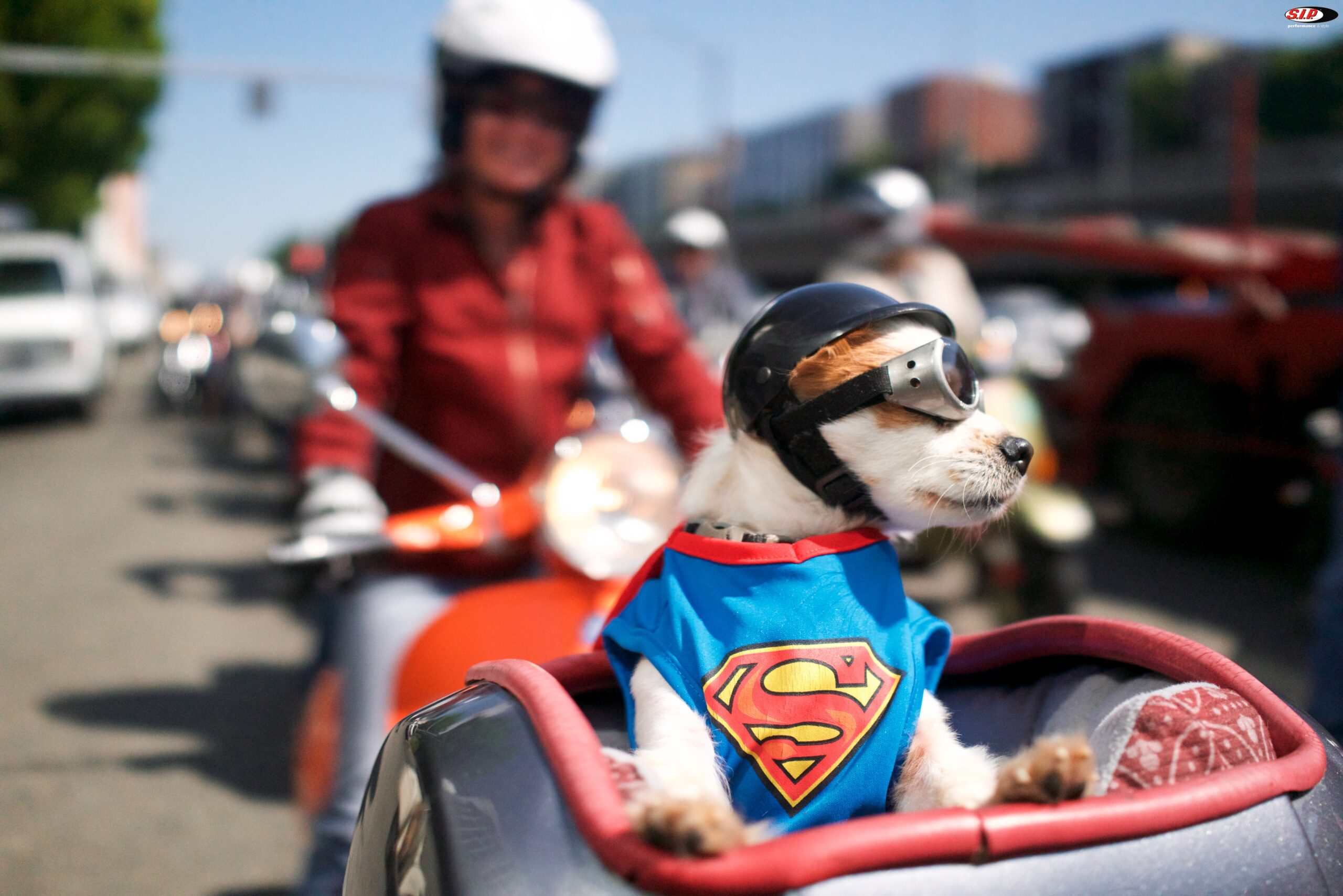
Traveling on a Vespa with your four-legged friend sounds like pure freedom. It is permitted as long as the dog is transported safely. It is important to have the right equipment: a sturdy transport box or trailer protects our faithful companions. Some dogs also wear protective goggles or special harnesses. But training is essential: gradually get them used to the engine noise, wind, and carrier, first when stationary, then on short journeys. This will ensure that your Vespa tour is not only legal, but also relaxed and safe for both of you, and that the focus remains on having fun.
Legal framework for transporting dogs on motor scooters
The law allows dogs to be transported on motor scooters as long as safety is ensured. This means that the dog must not pose a danger to you or other road users. Violations of these regulations will result in fines or even driving bans. Anyone who ignores the regulations also risks the welfare of their furry friend. The road traffic regulations therefore stipulate that animals must be secured in such a way that they do not interfere with you or other road users. Legally, a dog on a Vespa is therefore equivalent to transporting luggage, but higher safety requirements apply.
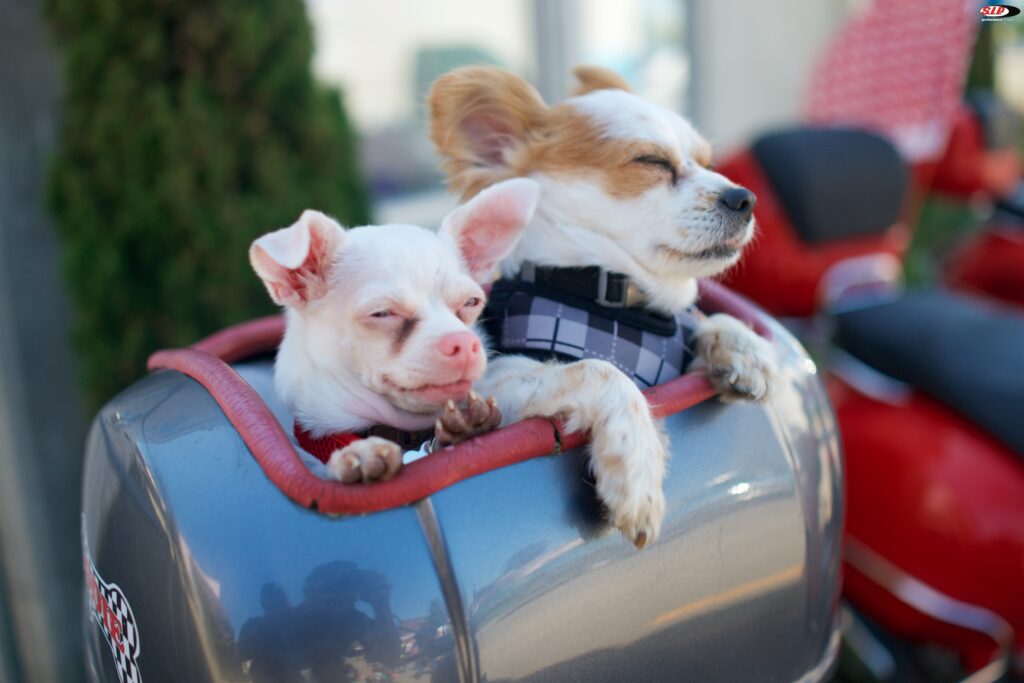
Transport box and trailer for your four-legged friend
A sturdy transport box that is securely attached to the Vespa is ideal for transporting small dogs. Important: The box must sit firmly on the scooter and be non-slip and low-vibration.
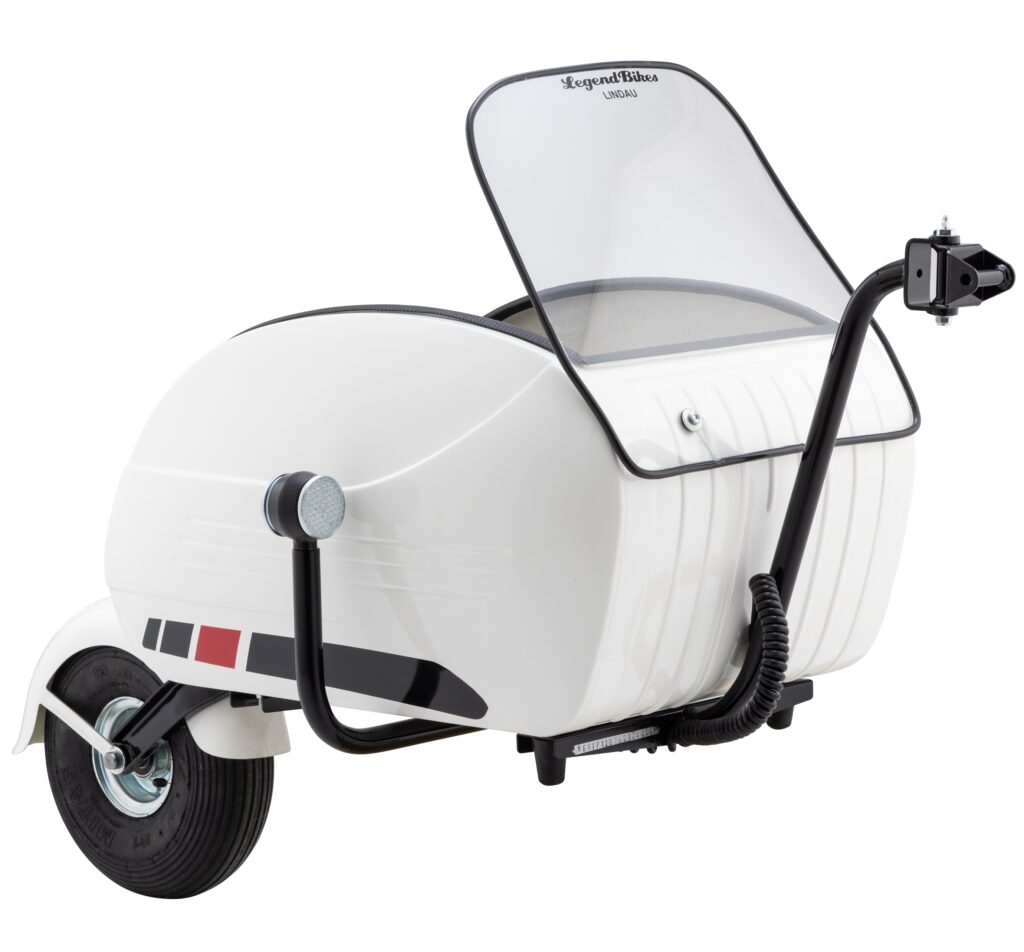
Larger dogs need more space and comfort. A special trailer that attaches to the two-wheeler, such as the Trailer LEGENDBIKES, is suitable for this purpose. This transport option complies with legal requirements and ensures sufficient freedom of movement.
A special dog harness provides additional stability for the animal. It prevents the dog from jumping out of the box or trailer in the event of unexpected movements. For sensitive eyes, dog goggles are recommended to protect against wind, dust, and insects. These small details significantly increase safety and make the ride more enjoyable.
Training and gradual familiarization with the two-wheeler
Dogs are sensitive to noises, vibrations, and new environments. Therefore, transporting them on a Vespa only works with training.
- Step 1: At the beginning, it is sufficient to make the transport box or trailer accessible when stationary. The dog explores it, sniffs it, and associates the space with calm and safety.
- Step 2: In the next step, run the scooter while stationary with your four-legged friend sitting in the trailer or box so that they can get used to the vibrations. This is followed by short trips at low speed in a quiet environment.
- Step 3: Only when your dog remains relaxed should you move on to longer distances and heavier traffic.
Putting on glasses and a harness also takes practice. Positive reinforcement with treats and rest periods supports the process.
Important: Patience is key to success here; overwhelming your dog can be harmful and cause anxiety.
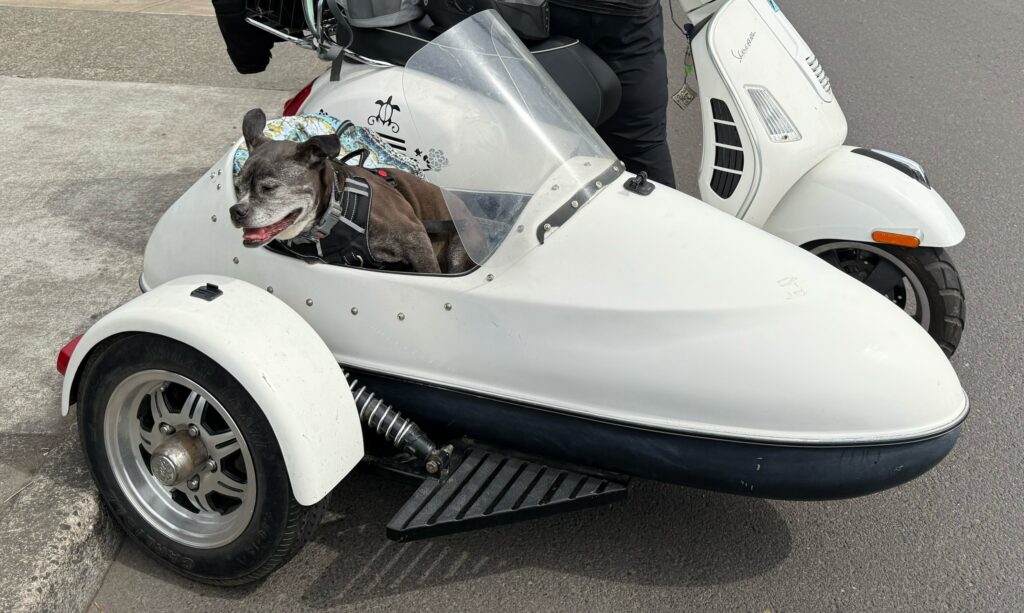
Safety: A basic requirement for every trip
Safety is the basis for every trip together. Without it, the dog will remain stressed and the trip will be dangerous. Therefore, before every departure, check that the crate or trailer is securely fastened, check the harness, and pay attention to the weather conditions. In extreme temperatures, it is better to avoid longer trips. Speed should also be adjusted: accelerating too quickly or braking abruptly endangers the animal and can cause stress.
Visibility is also important. It can be increased by placing reflective stickers on the crate or trailer. This allows other road users to recognize the special situation early on. If you take these points into account, you can enjoy maximum safety and riding pleasure with your dog on your Vespa.
Freedom in harmony with responsibility
Vespas and dogs both represent joie de vivre, independence, and style. To ensure that riding is not only fun but also safe, clear rules, suitable equipment, and thorough training are required. Legally, you have the green light as long as safety comes first. If you use a transport box or trailer, slowly get your pet used to the noise and wind, and make sure everything is stable, you’ll be setting the stage for some awesome trips. In this case, freedom on a scooter means taking responsibility—for yourself, your dog, and everyone else on the road.